Two New Advisors Join Lumai as We Bring Optical Computing to the Data Center


Energy has overtaken transistor density as the binding constraint on AI. Frontier labs are projecting roughly a 1,000x increase in the compute needed over the next five years, and meeting that with conventional digital hardware would mean something like $100 trillion in infrastructure and 1,000 GW of new electrical capacity. That goes beyond a scaling problem. That's a wall.
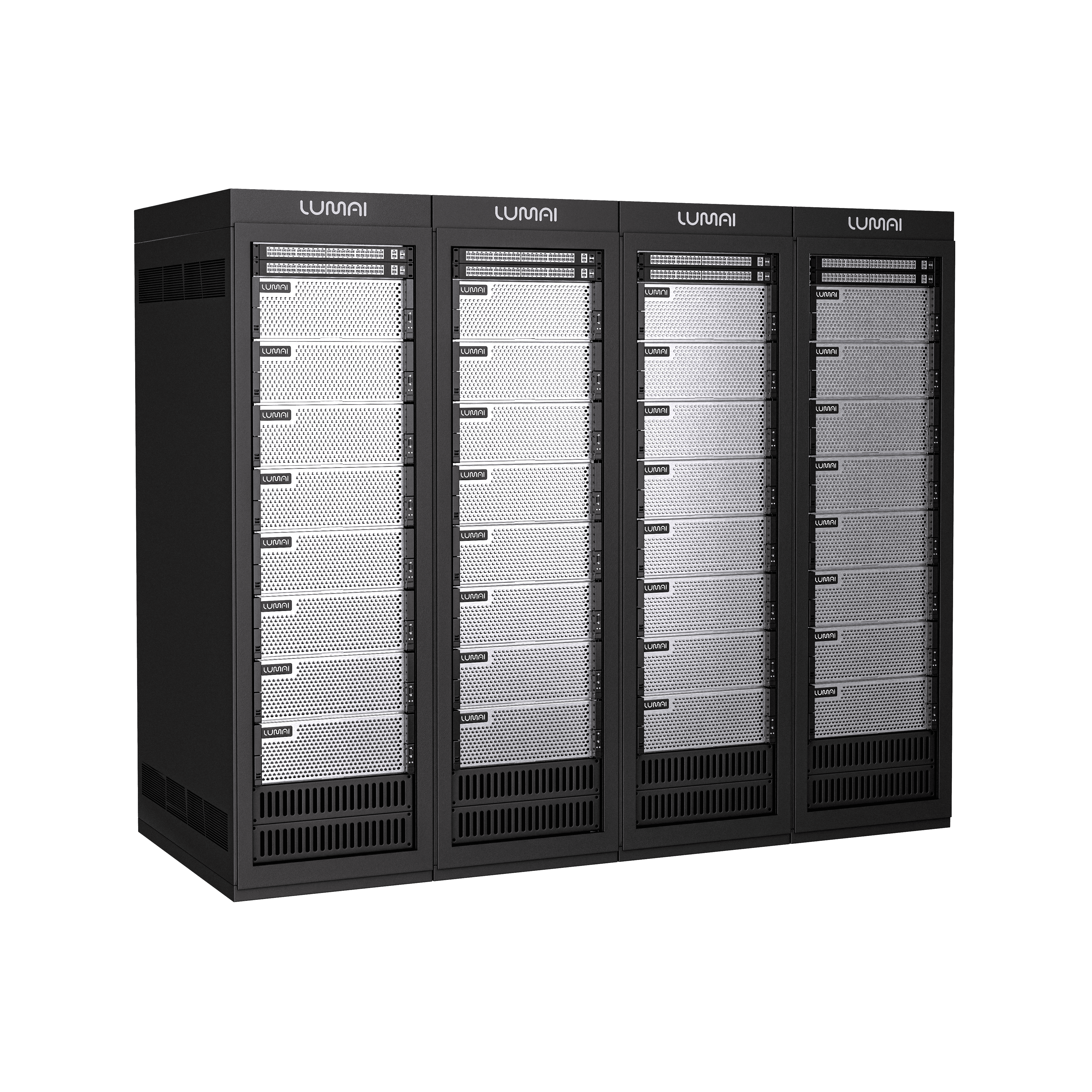
We started Lumai to break through it. Iris Nova, our first-generation optical AI server, runs billion-parameter models and deploys in existing air-cooled data center racks. We are now developing hardware that will cut energy per inference by roughly 10x compared to GPUs. Iris Nova is real hardware, ready for evaluation today, marking the first deployment of a free-space optical engine for billion-parameter LLM inference. We are reshaping AI infrastructure from the fundamentals, replacing electrons with light for the matrix multiplications that dominate inference workloads.
Getting this into data centers at scale takes more than good optics. It takes people who understand how research becomes real infrastructure, and how infrastructure becomes something enterprises actually adopt. That's why I'm glad to welcome two new advisors to Lumai: Professor Philip Torr and Alex Spinelli.
Alex Spinelli
Alex is SVP of AI and Developer Platforms at Arm, where he leads AI and developer software strategy across an ecosystem of 30 million developers. He also sits on the board of PyTorch, the framework most AI teams already build on, a perspective that matters as we make sure Iris fits cleanly into existing ML workflows. Before Arm, he was VP of Core Machine Learning at Google, where he drove product strategy across TPUs, TensorFlow, and JAX and helped lead the systems work behind Gemini's launch. Earlier, he was CTO and EVP of Product and Operations at LivePerson, FastCompany's #1-ranked AI company in 2022, where he built the technology enterprises use to create their own conversational assistants.
Alex brings a rare combination of chip-industry and AI-developer-ecosystem experience, and he's direct about why he joined us:
“I was drawn to Lumai because of their vision to transform the AI industry by delivering an optical AI server that transforms the efficiency equation in AI compute, enabling more AI with far less power. I am privileged to be able to bring my experience in understanding the AI developer and software ecosystem to help Lumai accelerate their path to market.”
Professor Philip Torr
Philip is a Fellow of the Royal Society and a Fellow of the Royal Academy of Engineering, and leads the Torr Vision Group at the University of Oxford, where he holds a chair in Computer Vision and Machine Learning. His career includes six years at Microsoft Research, spanning Redmond and Cambridge, and the 1998 Marr Prize, computer vision's highest honor. In 2021 he was named a Turing AI World-Leading Researcher Fellow. He has also taken that research into industry, founding Oxsight and AIstetic and serving as chief scientific advisor to Five AI through to its 2022 acquisition by Bosch.
Philip's view of the problem mirrors why we started Lumai in the first place: energy is the biggest bottleneck facing AI today. What excites him about our approach is that it goes beyond another hardware upgrade, it's a route to energy-efficient compute that also opens the door to new classes of algorithms capable of superseding today's paradigms. As he put it, joining Lumai's advisory board was an easy decision once he saw the team we've built: “Xianxin and the team have the vision and engineering depth to bring this breakthrough technology to market.”
Why This Matters Now
Philip and Alex bring perspectives from opposite ends of the same problem: one from the frontier of AI research, the other from the platforms and developer ecosystems that determine whether new infrastructure actually gets adopted. Both arrive at the same conclusion we did, that a fundamentally different compute technology is required, and both are here to help us get it into data centers faster.
We're building the infrastructure for the Inference Era. Welcome, Philip and Alex.

CEO Interview with Xianxin Guo of Lumai
A first for optical compute: running billion-parameter LLMs in real time